
In Israel, a grave new danger to Jews – other Jews
When extremists attack Jews anywhere else in the world, we demand arrests and governmental protection; we must do the same in Israel
By Esther Sperber in the Times of Israel (Full piece linked here)
There is a rising sense of angst among many Jews of all political persuasions, a feeling that the world is getting more hostile towards us. We know that this is not without reason: attacks against Jews around the world have increased in recent years, especially since the October 7th attacks and Israel’s subsequent assault on Gaza. In May, two young diplomats were killed in Washington, DC. In June, a Molotov cocktail injured 12 people at the Boulder weekly run for the Israeli hostages. On Yom Kippur, a terrorist rammed his car at a Manchester synagogue. Two worshipers were killed by police gunfire.
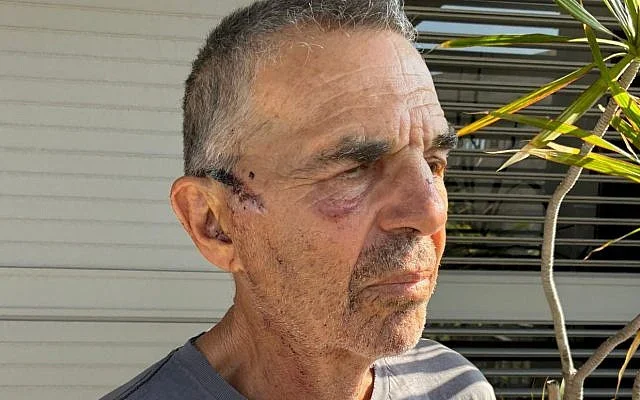
When Jews anywhere are attacked, arrested or beaten up, we rally to support them. We don’t ask who they voted for or how they pray. We have powerful organizations that immediately put out statements, Instagram posts and social media videos and we loudly proclaim “never again is now.”
But even as we carefully track the risks coming from White supremacists on the right and extreme pro-Palestinian activists on the left, we are overlooking a new risk to Jews. After two years of war that claimed thousands of lives, we are now witnessing rising extremist violence perpetrated by Jews and directed towards Jewish victims.
Consider this partial list from just the few weeks: Yuval Ben Ari, a reservist protecting Palestinian olive harvesters, was beaten with clubs and rocks by settlers; Oded Yedaya, head of the Minshar art school, was hospitalized after settlers attacked him while he filmed their threats; Rabbi Dana Sharon was injured by a drone operated by settlers wearing IDF uniforms, who later fired live ammunition; Alec Yefremov was arrested, handcuffed, and stripped after heckling Minister Itamar Ben Gvir; Guy Peleg, a Channel 12 journalist, was blocked and assaulted by right-wing activists after giving a lecture in Tel Aviv; and Haviva Ner David and Rabbi Ian Chesir-Teran were detained simply for sitting silently on the sidewalk with a sign outside Minister Amichai Chikli’s home.
The motivations for these attacks were different, but they are all perpetrated by people who believe in Jewish power and have contempt for the rule of law, human rights, the importance of free speech, the right to non-violent protest, and the value of democracy.
In the West Bank, Hill Top Youth, a loose band of extremist, supremacist settlers, have been carrying out pogroms against local Bedouin and Palestinian communities for years. Their fanaticism strikes all who are in their way on the path to messianic redemption, even when those obstacles are fellow Jews who come to protect Palestinians.
Footage shows a drone hovering over a group of volunteers at a Palestinian West Bank olive harvest on November 4, 2025. After the drone fell on a volunteer, men in IDF fatigues were seen pointing their guns at the volunteers, and one fired into the air. (Social media: used in accordance with Clause 27a of the Copyright Law)
Normalized harassment
But the harassment is not confined to the West Bank. Haviva Ner David, Guy Peleg and a Ben-Gurion University lecturer were attacked for protesting, reporting honestly and speaking freely. In other words, they were attacked for daring to oppose the actions of the Israeli government. These terrifying assaults are becoming routine, even normalized, infiltrating the very foundations of the Israeli state.
The problem is not only the attacks themselves, but the official response – or lack of one. Consider two similar incidents: in London, pro-Palestinian activists stormed an Israeli professor’s classroom at City College, demanding he be fired and accusing him of responsibility for the Sabra and Shatila massacre because he served in the IDF at that time.
In Beersheba’s Ben-Gurion University, Knesset Member Almog Cohen led a group that stormed into lecturer Sebastian Ben-Daniel’s computer science class, calling for his dismissal over his social media posts opposing the war in Gaza.
The responses could not have been more different: in London, campus police immediately removed the intruders, hundreds of academics issued a letter of support, and Parliament discussed the incident. In Israel, a Knesset member led the attack himself, a pistol visible on his belt. Campus security evacuated the professor, not the attacker, and no condemnation was issued by the Knesset.
If Jews were attacked in this manner in Paris, London, New York or anywhere other than Israel and the West Bank, every mainstream Jewish organization would express support, demand immediate arrests, call for increased police protection, and insist on government accountability. If Jews were targeted for expressing their views on social media, quietly and legally protesting, or doing investigative reporting, you can bet the Jewish public outcry would be deafening.
But when Jews attack other Jews in Israel — with impunity and often under the watch of the police and IDF — we avert our eyes. Or we dismiss the issue as that of a few bad apples. Because many of us feel a deep connection to the people of Israel, it is painful and challenging to acknowledge the normalization of Jewish supremacy and the growing acceptance of violence against those with whom we may disagree.
Under the watch of the current extreme right-wing Israeli government, and under law enforcement that overlooks or supports these Jewish rioters and vigilantes, both Jews and Palestinians are unsafe.
What has led to this increase in violence by Jews against Jews? There are likely many contributing factors. The more forgiving explanation sees the increasing violence as a result of the trauma of 10/7 and the ensuing stress of two years of war. But one can also recall Yeshayahu Leibowitz, who warned that the military occupation and the dehumanization of Palestinians would corrupt the souls of the Israeli public. He predicted that practices that become normalized in the West Bank and Gaza will ultimately be inflicted on Israeli citizens in Israel.
The violence by Jews against other Jews has not reached the level of violence against Israeli Arabs (see attacks on Arab bus drivers in Jerusalem), Palestinians in the West Bank and Gaza. But it is increasing and it is alarming. If Jewish organizations and communities are committed to the task of protecting Jews, then we are failing in that mission when it comes to extremist violence by Jews in Israel and the West Bank.
Global Jewry is vocal when Jews are attacked anywhere in the world, and it must demand from the Israeli state what it would demand from any other democratic country: that it protect all its citizens, safeguard free speech and protest, and prosecute those who commit political violence.
If we care about Jewish safety we cannot be silent in the face of Jewish violence.
